Alcohol Dilution Calculator — Water or Alcohol to Add
Calculate water or stronger alcohol to add, prepare an exact final volume, lower or raise ABV, blend two strengths, and convert U.S. proof.
What do you want to calculate?
How much water should I add?
Reduce a beverage from its current alcohol by volume to a lower target strength while preserving the estimated amount of pure alcohol.
How much stock alcohol and water make my final volume?
Start from the amount of finished solution you need. This is the correct workflow for preparing a fixed bottle, flask or batch volume.
How much stronger alcohol should I add?
Raise a drink or solution to a higher target ABV by adding a known stronger alcohol. The target must be above the starting strength and below the added alcohol strength.
How much of a second liquid should I add?
Start with a known amount of liquid A, then solve the amount of liquid B needed to land between their two strengths.
Split a target batch between two strengths
Enter the finished quantity and target ABV. The calculator divides it between a stronger component and a weaker component.
Convert ABV and U.S. proof
Convert either direction and, when a volume is entered, estimate pure alcohol volume and U.S. proof gallons.
Mixture proportions
2.375 L final mixture40% ABV · 80 proof
- Starting liquid · 95% ABV1 L spirit · 42.1%
- Water · 0% ABV1.375 L water · 57.9%
Volumes are additive estimates; verify the cooled mixture when accuracy matters.
Calculation
- Calculate estimated pure alcohol: 1 L × 95% = 0.95 L.
- Divide 0.95 L by 40% to estimate 2.375 L final volume.
- Subtract the starting 1 L to get 1.375 L water to add.
Dilution balance
| Component | Volume | ABV | Pure alcohol |
|---|---|---|---|
| Starting liquid | 1 L | 95% | 0.95 L |
| Added water | 1.375 L | 0% | 0 L |
| Estimated final | 2.375 L | 40% | 0.95 L |
Quick alcohol dilution and fortification answers
Use these additive-volume estimates to lower or raise ABV, then verify the cooled and fully mixed liquid with a suitable alcoholmeter.
| Starting spirit | Water to add | Estimated final volume |
|---|---|---|
| 1 L at 99% to 70% ABV | 414.3 mL | 1.414 L at 70% |
| 1 L at 95% to 70% ABV | 357.1 mL | 1.357 L at 70% |
| 750 mL at 50% ABV | 187.5 mL | 937.5 mL at 40% |
| 750 mL at 60% ABV | 375 mL | 1,125 mL at 40% |
| 750 mL at 70% ABV | 562.5 mL | 1,312.5 mL at 40% |
| 1 L at 95% ABV | 1.375 L | 2.375 L at 40% |
| 5 L at 70% ABV | 3.75 L | 8.75 L at 40% |
Alcohol dilution calculator formula
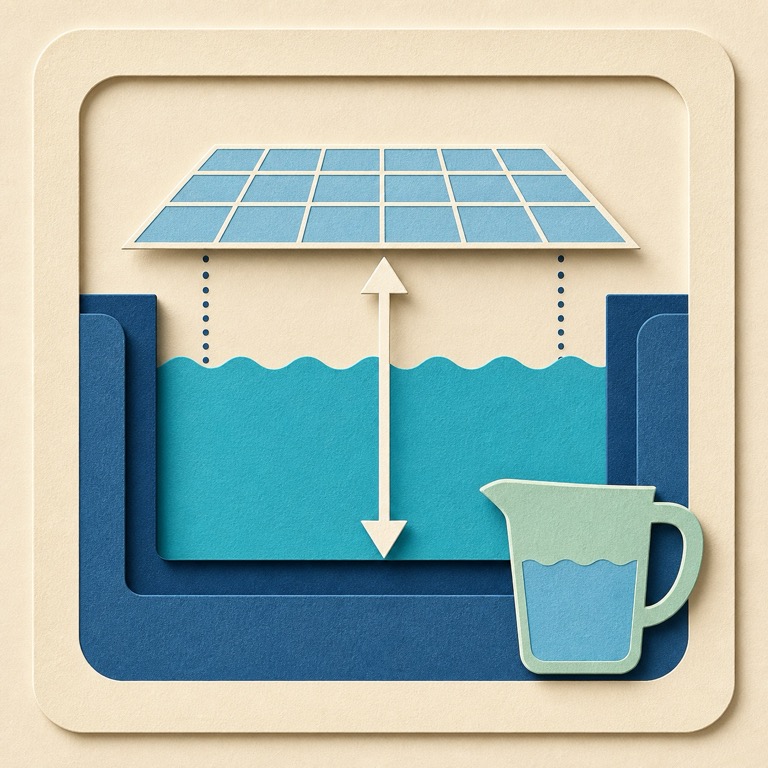
Dilution uses the balance V1 × A1 = V2 × A2. The estimated pure-alcohol amount stays constant while water increases total volume and lowers ABV.
How to raise ABV with stronger alcohol
Use added volume = starting volume × (target ABV − current ABV) ÷ (added alcohol ABV − target ABV). For 72 mL at 5% raised to 10% with 100% alcohol, add 4 mL. For 40 L at 10% raised to 20%, add 5 L of 100% alcohol for an estimated 45 L final volume.
Blend two alcohol strengths
For two liquids, the calculator balances pure alcohol from both components. The requested target must sit strictly between their ABV values.
Plan a target batch
Choose a finished volume and target strength, then split the batch between stronger and weaker components. This is useful for repeatable recipe planning and scale-up.
ABV to U.S. proof converter
U.S. proof is twice alcohol by volume, so 40% ABV equals 80 proof. Other countries and historical systems may define proof differently.
Frequently asked questions
How much water do I add to reduce ABV?
Multiply starting volume by current ABV, divide by target ABV, then subtract the starting volume. Keep all volumes in the same unit.
Why are there two different 99% to 70% answers?
Starting with 1 L of 99% stock produces about 1.414 L after adding 414.3 mL water. Preparing exactly 1 L final volume instead uses 707.1 mL stock and 292.9 mL water. Choose the workflow that matches which volume you already know.
How much pure alcohol raises 72 mL from 5% to 10%?
Add 4 mL of 100% alcohol for an additive-volume estimate of 76 mL at 10% ABV. If the alcohol you add is weaker than 100%, select its actual ABV and the calculator will adjust the amount.
How much pure alcohol doubles 40 L from 10% to 20%?
Add 5 L of 100% alcohol. The starting liquid contains 4 L of pure alcohol; the added 5 L produces 9 L of pure alcohol in an estimated 45 L mixture, which is 20% ABV. This assumes additive volumes.
Can I blend two beverages to an exact ABV?
This calculator gives a volume-balance estimate. Sugar, dissolved solids, temperature, and alcohol-water contraction can make a measured final value differ.
Why must the target be between the two strengths?
Mixing only two components cannot produce an ABV above both or below both. Add a different-strength component or change the target.
Is 40% ABV always 80 proof?
It is 80 proof in the U.S. system. The TTB defines proof for distilled spirits as twice percent alcohol by volume.
Does this replace a hydrometer or laboratory measurement?
No. It is a planning estimate based on stated ABV and additive volume. Regulatory proofing uses temperature correction, density data, and approved measurement procedures.
Standard or OIML 20 °C water calculation?
Standard mode uses C1V1 = C2V2 and subtracts the starting volume. OIML R 22 mode converts each entered ABV to mass fraction and density at 20 °C, conserves ethanol mass, and converts the added water mass back to volume. The theoretical final mixture volume is unchanged, but the water poured before contraction is larger. This mode applies only to binary ethanol-water mixtures without sugar or dissolved solids.
Method and measurement limits
ABV and all OIML volumes are referenced to 20 °C. Temperature, dissolved material and instrument calibration can change the measured result; neither method replaces a calibrated alcoholmeter. See the official OIML R 22 alcoholometric tables, the TTB proofing tutorial, and the NIST alcohol density and temperature tables.
Scope and safety
This tool is for beverage recipe planning. It does not determine drinking safety, legal compliance, distillation safety, sanitizer formulation, medical dosing, or laboratory concentration. Verify finished products with suitable measurement and follow applicable law and professional guidance.